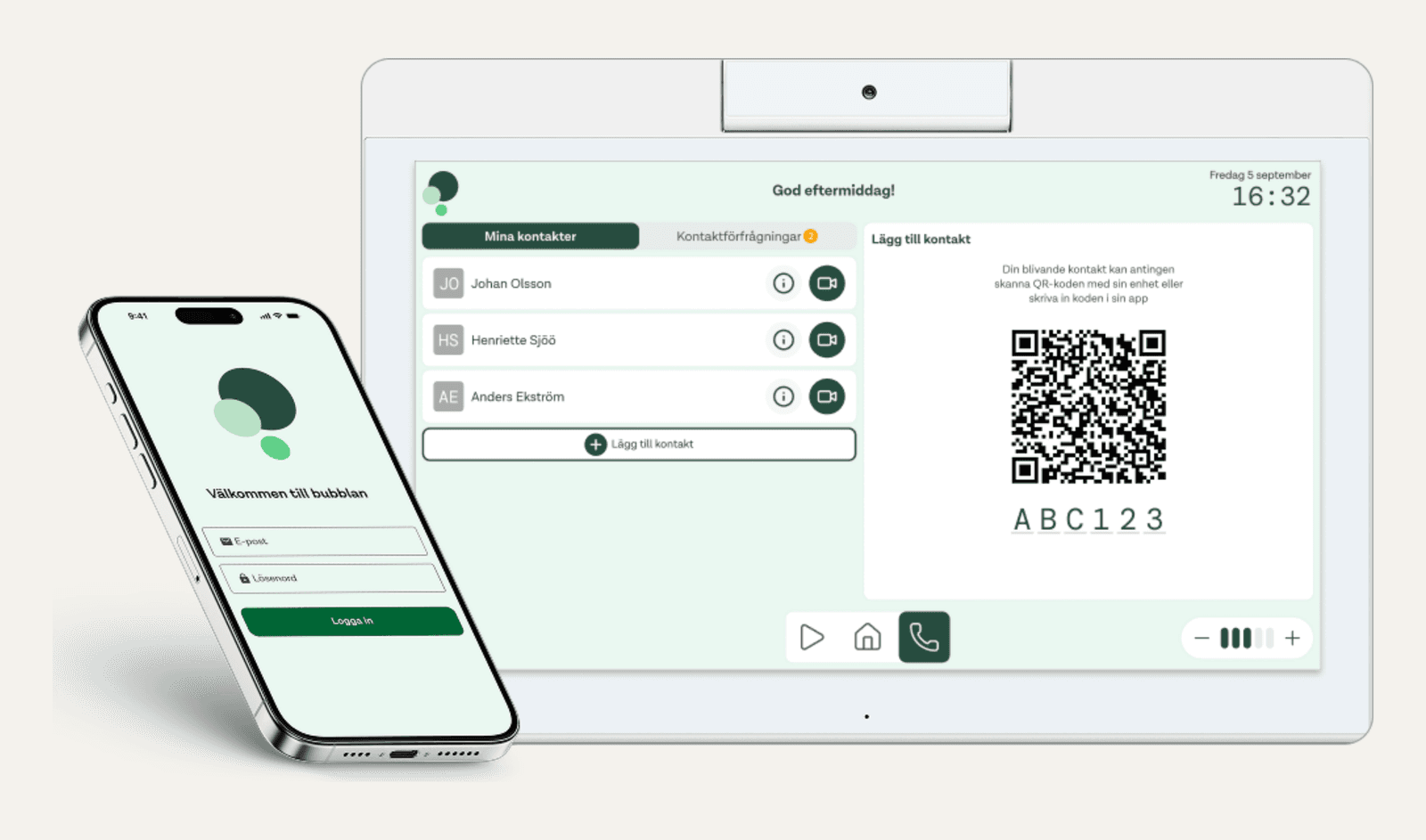
Care by Iris
Making connected care technology easier to understand, adopt and live with.
Summary
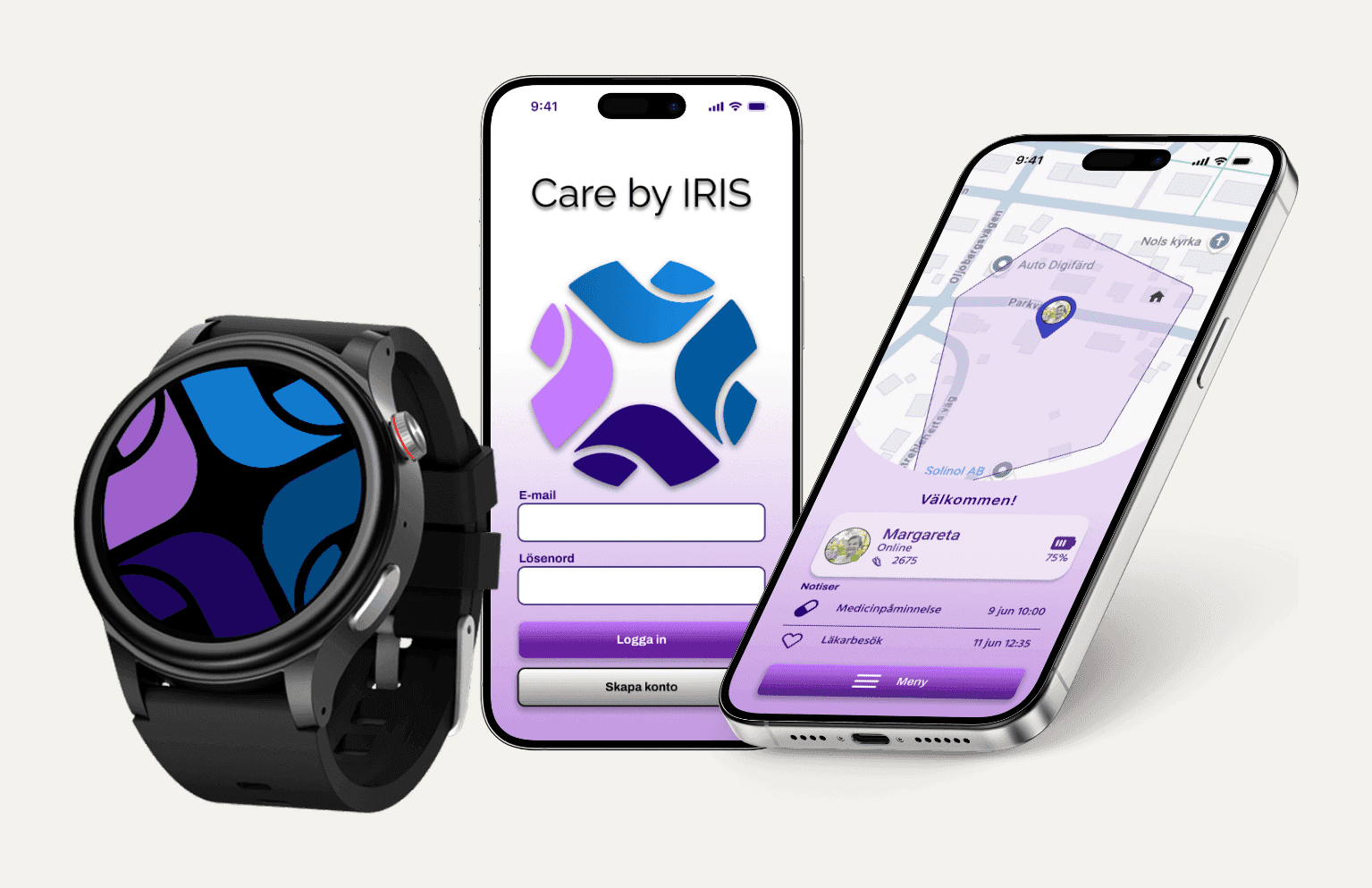
Care by Iris is the IRIS safety watch and its companion app, a Vinnova-funded innovation project run by Digalog and Digital Dimension Sverige AB together with Vingåkers kommun. I joined shortly after the hardware arrived and, over eight weeks, took the app design from lo-fi wireframes to a launched app in the App Store and Google Play, built a design system, reworked the watch's interface from Chinese to Swedish, and produced onboarding flows and physical manuals ahead of pilot tests with seniors in Vingåker.
The challenge
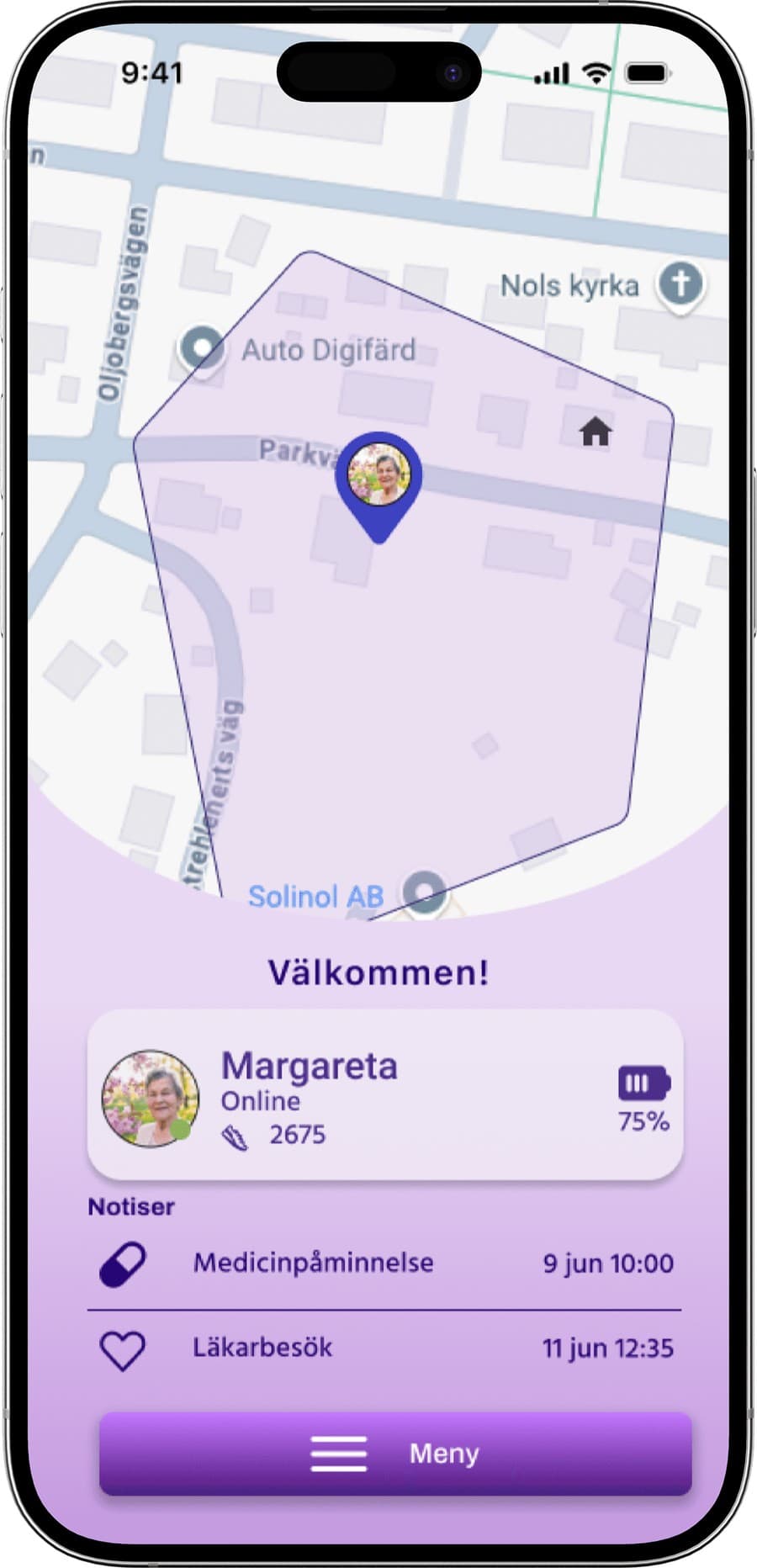
IRIS is a welfare-tech initiative aiming to increase safety, independence, and quality of life for elderly people before municipal care becomes necessary. The product consists of a safety watch with fall detection, positioning, and health-related features, plus a mobile app where relatives and users can follow status, get reminders, and manage settings.
The background is a clear societal problem: a growing elderly population needs more support while resources shrink. As families increasingly live spread out geographically, a new kind of everyday worry emerges too, having an elderly parent living far away can create stress and a feeling of not being able to be there when it truly matters. IRIS aims to reduce that worry through safety and structure, well before home care or assisted living becomes necessary. In a later step, IRIS will also connect to an external safety response center, an extra safety net for users without close family or who want additional round-the-clock reassurance.
My starting point
I joined the IRIS project shortly after the company had received the new hardware, the watches. There was already a clear direction, an established graphic profile, completed research, and a finished website, while a webshop was being developed in parallel. The project was run by Digalog and Digital Dimension Sverige AB and was part of an innovation project funded by Vinnova in collaboration with Vingåkers kommun.
My initial role mainly involved supporting the launch of test groups in Vingåker, conducting user interviews, and contributing to app design. The scope grew fairly quickly, and I ended up working broader and more hands-on than expected, with everything from onboarding flows and design structure to communication, test follow-up, and materials built for real-world use. Product design probably describes what I actually got to contribute better than UX or UI alone.
From concept to launched app
What existed early on for the app design was an idea and a few low-fi wireframes. To make things easier for both ourselves and the developers, we put together a priority order for what minimally needed to be in place for the pilot tests to be as valuable as possible.
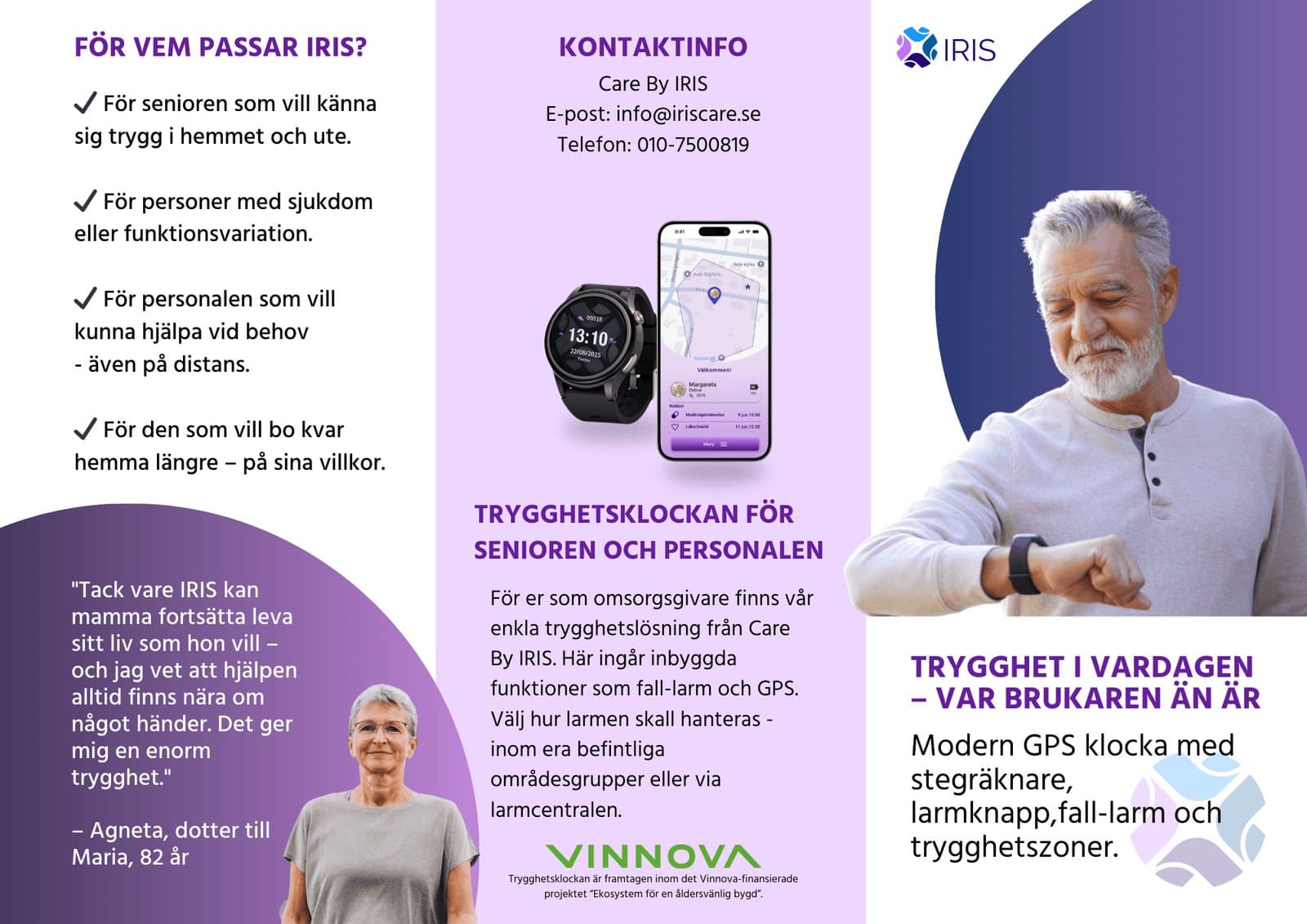
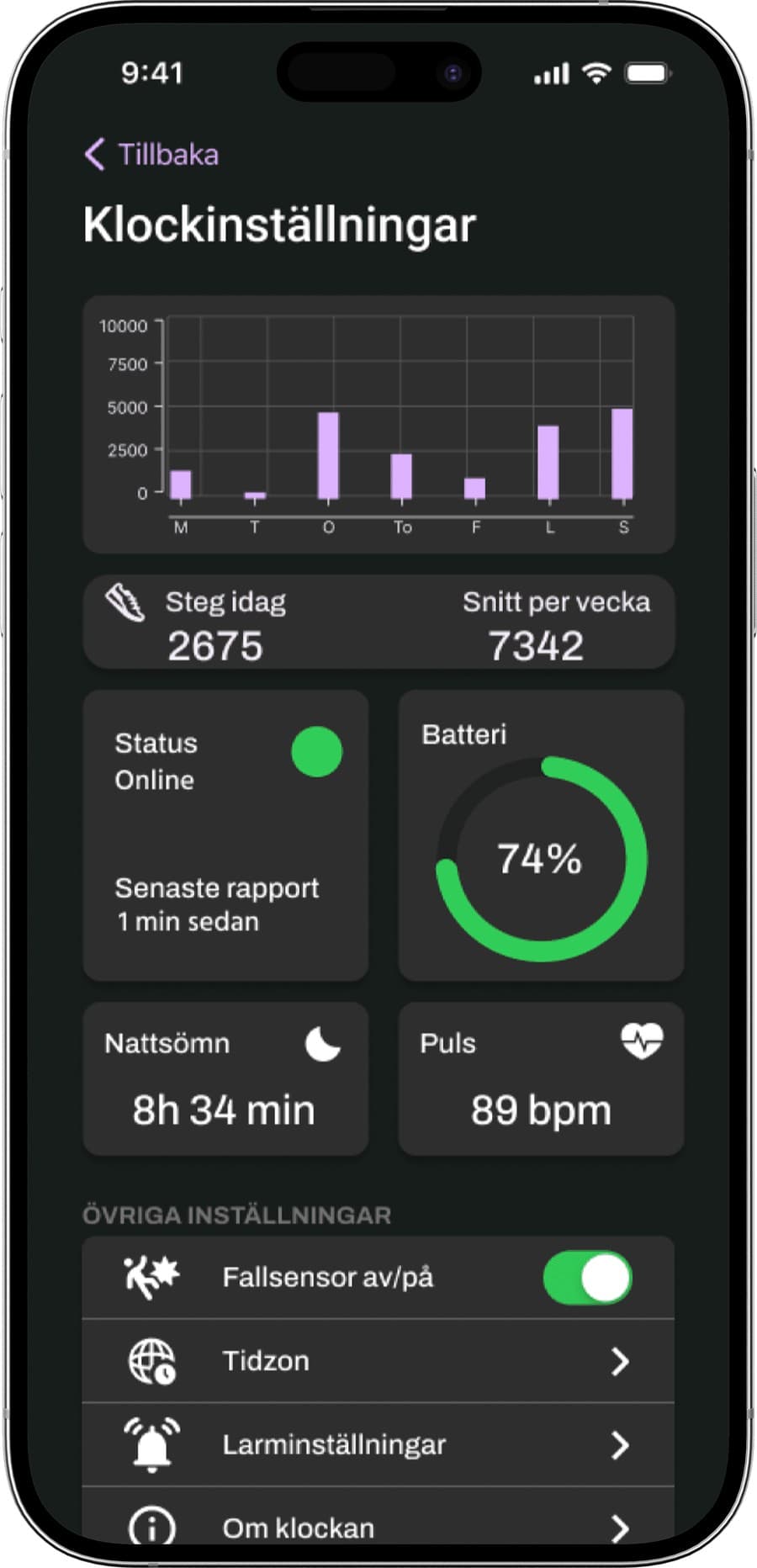
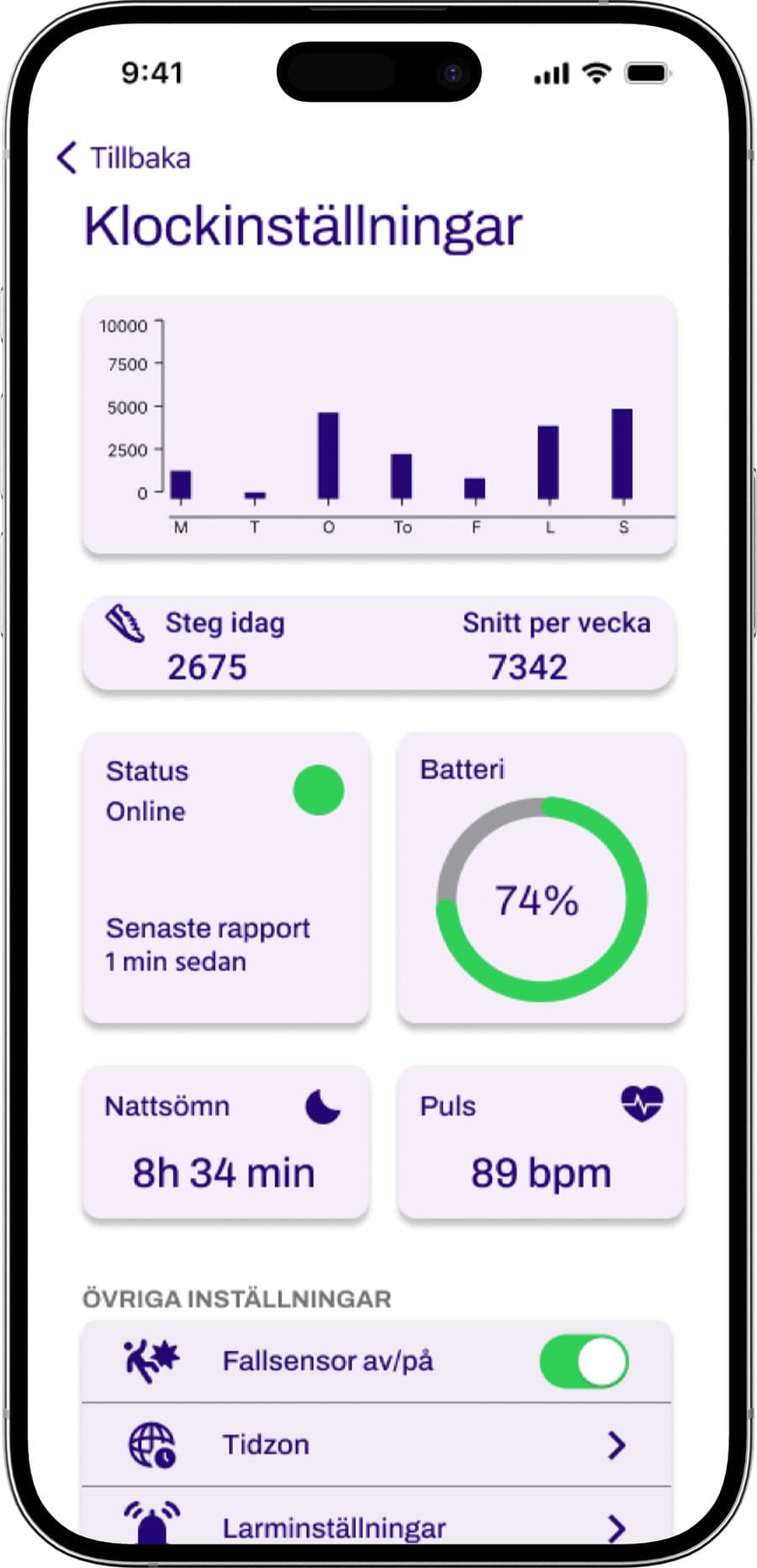
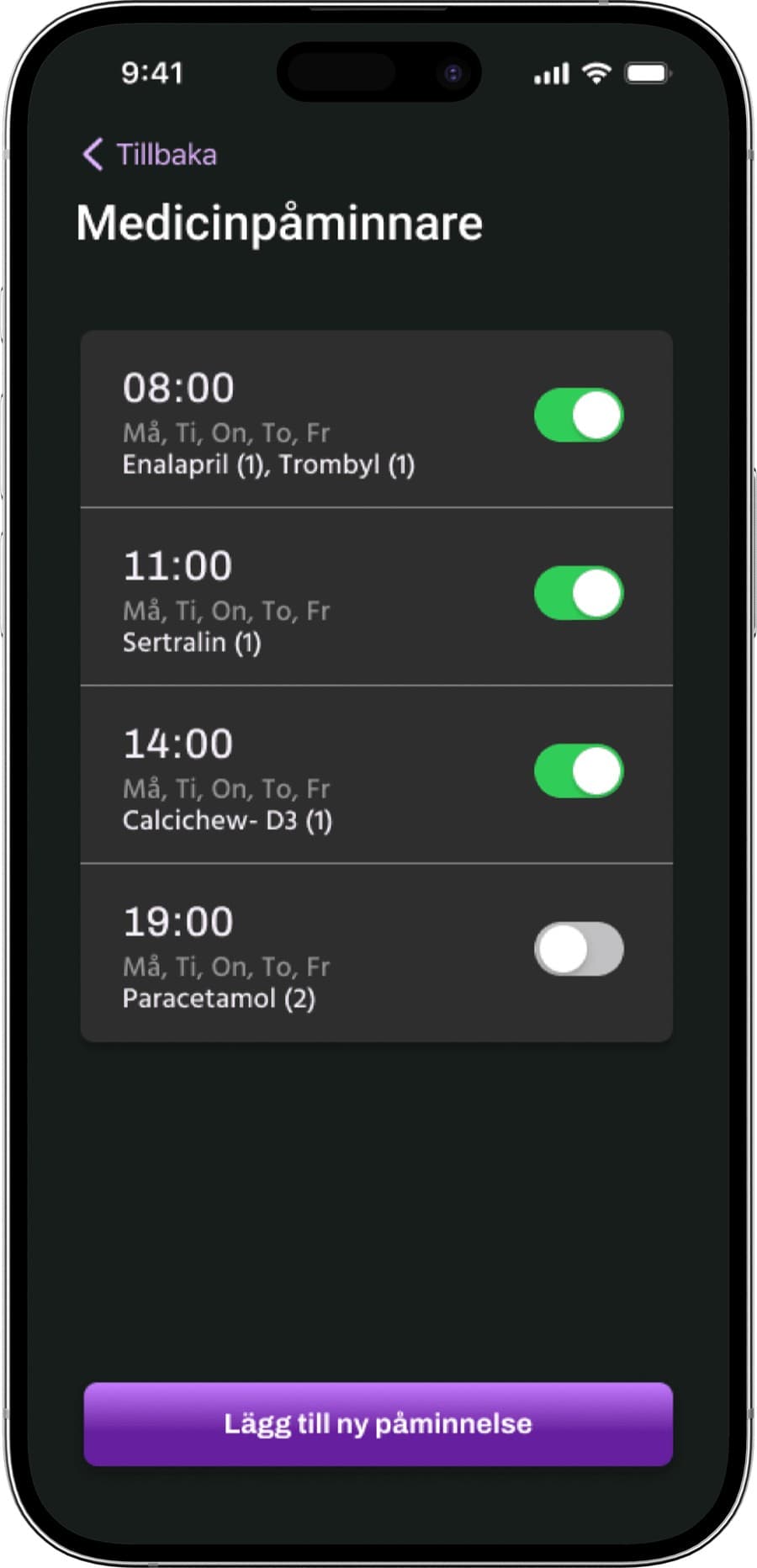
Over the eight weeks I was there, we went from raw hardware, an app concept, a graphic profile, and a website to: a working app in both the App Store and Google Play, a design system with a component library and a style guide that enabled continued development, watches with a Chinese UI and excessive menus reworked into a Swedish UI stripped down to the essentials, and a get-started guide for the watch plus onboarding flows for both the iOS and Android apps.
Onboarding: guiding the user all the way
Beyond research and app design, we needed to produce clear support material for the elderly users taking part in the pilot tests. Since the target group largely consisted of seniors, this required extra focus on readability, contrast, text size, and visual steps that could be followed without prior tech experience.
Insight
Observation
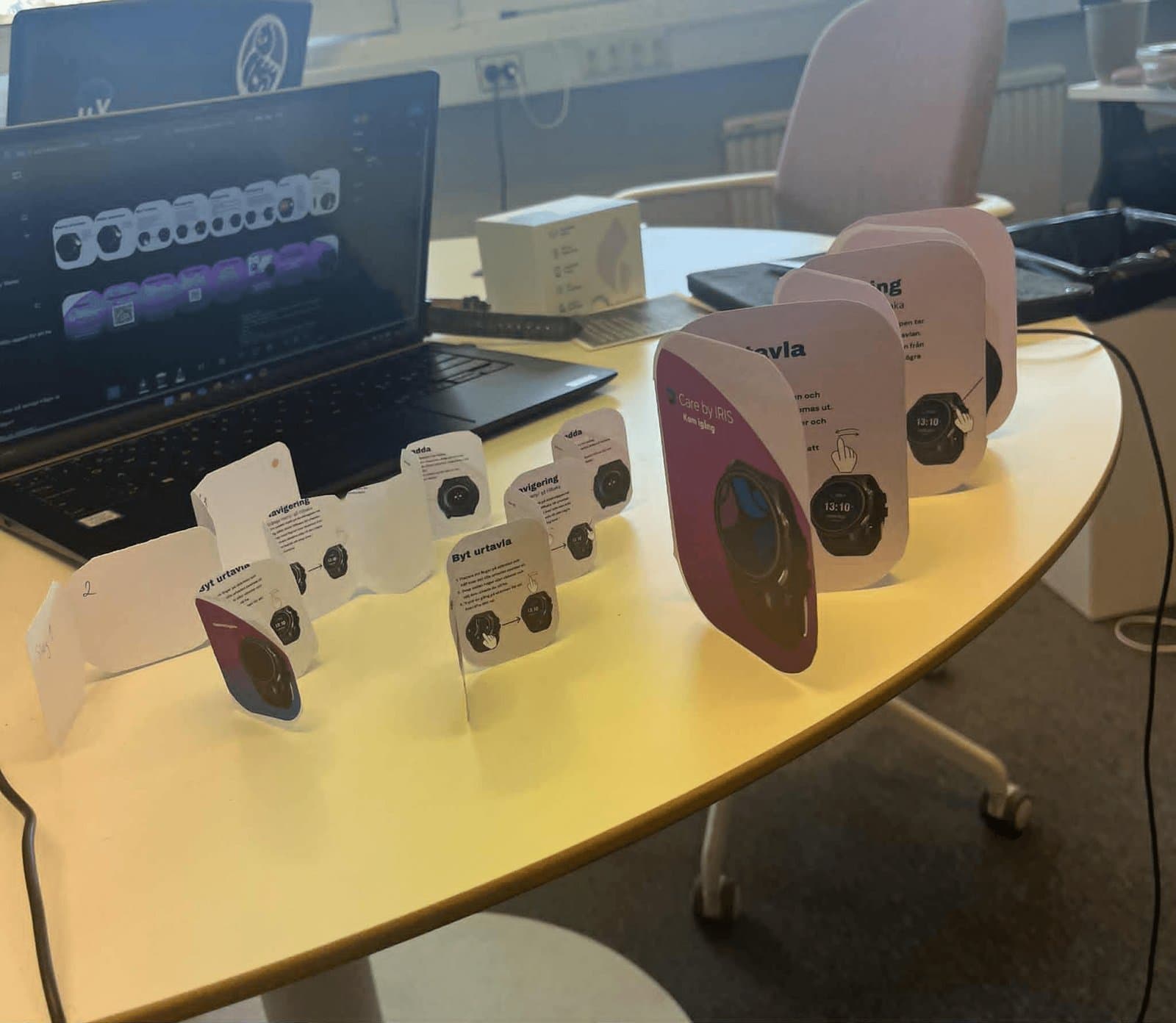
An early visit to the print shop revealed that our original plan for the onboarding manual wasn't practically feasible within the project's timeframe.
Why it mattered
We had an upcoming usability test and a senior audience that needed clear, pedagogical material, so there was neither the time nor the margin to wait out an external print process.
Design implication
The manuals were instead produced internally with the resources available, and through several iterations and tests we landed on a format that was pedagogical, easy to scan, and sized to fit inside the product's packaging.
Testing in the real world
Ahead of the pilot tests, I helped put together forms aimed at both test participants and their relatives, to understand which features felt most valuable, what questions came up, and what concerns the technology might raise. I also took part in three trips to Vingåker, where I got to meet the test participants and see the solution used in its actual context.
Final experience
As the internship period drew to a close, the pilot tests were in full swing and the onboarding flow for both app and watch was finished. Beyond the app design, the outcome included physical manuals and films used in communication and marketing.
Outcome
The outcome after eight weeks was an app launched in the App Store and Google Play, a design system the team could continue building on, a reworked and significantly simplified watch interface, and complete onboarding flows and physical manuals ready for pilot tests with seniors in Vingåker. The forms for test participants and relatives gave a clear picture of why the project matters and what concrete difference the solution can make for safety, both at the individual level and in a broader societal perspective.
Reflection
My first internship was a crash course in what product development actually looks like when you're building something meant for the real world. Getting to help develop Care by Iris wasn't just educational, it was genuinely exciting because I got to step into so many different parts of the process and see how it all connects.
What I take with me most: how much details matter when the audience is seniors, language, contrast, text size, clarity, and pacing in both speech and writing can be the difference between something working or not. The value of meeting real users: the visits to Vingåker gave more insight than guessing, AI, or research ever could, and it was useful to have to adjust for real needs rather than just design logic. That design is always part of a larger system, with collaboration and compromises between design, development, and project management, where prioritizing, documenting, and building shared understanding matter enormously. And that "good enough" is sometimes the right call: in a pilot and a small team, it's often about solving the right problem in the right order, even when there isn't time for everything to be pixel-perfect.